
Self Defense in Arizona: The Complete Guide
Table Of Contents
- Why Self Defense Matters in Arizona
- The Truth About Real Violence
- The Three Layers of Self Defense
- Awareness and Avoidance
- De-escalation Skills
- Physical Self Defense Skills
- The Best Martial Arts for Self Defense
- Self Defense for Women
- Self Defense for Kids
- Self Defense for Older Adults
- Arizona Self Defense Laws
- Common Self Defense Myths
- Building a Self Defense Training Plan
- After an Incident: What to Do
- Self Defense at Fight Ready
- Frequently Asked Questions
Why Self Defense Matters In Arizona
Arizona is generally a safe place to live. Phoenix, Scottsdale, and the surrounding communities offer good neighborhoods, friendly people, and a quality of life that draws residents from across the country. But safety is not a guarantee, and the unexpected happens everywhere. The smart approach is to prepare for the unlikely without living in fear of it.
Real self defense is not about turning yourself into a fighter. It is about giving yourself options when something goes wrong. Most adults will never be in a physical altercation. The ones who train get the dual benefit of being prepared if the unlikely happens and carrying themselves with quiet confidence in everyday life. That confidence often prevents incidents from ever starting.
This guide is for Arizona residents who want to understand what real self defense actually involves. It covers mindset, awareness, physical skills, legal considerations, and how to find a quality training program in the Phoenix metro. Whether you have never trained or have years of experience, the framework here will help you think clearly about preparation.
The Truth About Real Violence
Most people get their understanding of violence from movies and television. This is dangerous because the real world looks nothing like Hollywood. Understanding real violence is the first step toward real preparation.
Real Fights Are Fast
Most physical altercations last less than 30 seconds. There are no extended exchanges. There is rarely a clean technique. There is usually chaos, panic, and the person who lands the first effective hit often wins. Preparation has to account for this speed.
Most Attacks Happen at Close Range
Movie fights happen at striking range with both fighters squared off. Real attacks happen at conversation distance, often with surprise. The attacker is close enough to touch you before you realize what is happening. This is why grappling skills are so valuable. Many real altercations end up in clinches and on the ground within seconds.
Fear Affects Performance
Adrenaline does strange things to the body. Fine motor skills disappear. Tunnel vision sets in. Time perception distorts. Trained responses survive this stress better than memorized techniques. This is why repetition and stress-tested skills matter more than fancy moves.
Most Attackers Are Untrained
The good news is that most attackers have no real martial arts training. They rely on aggression and surprise. A defender with even basic training has significant advantages. Six months of consistent BJJ or boxing puts you ahead of nearly any untrained attacker.
Weapons Change Everything
A knife or gun changes the equation dramatically. The first priority in any weapon situation is to escape if possible. If escape is impossible, the techniques required are different from empty-hand self defense. Quality training programs cover weapon scenarios as a separate module.
The Three Layers Of Self Defense
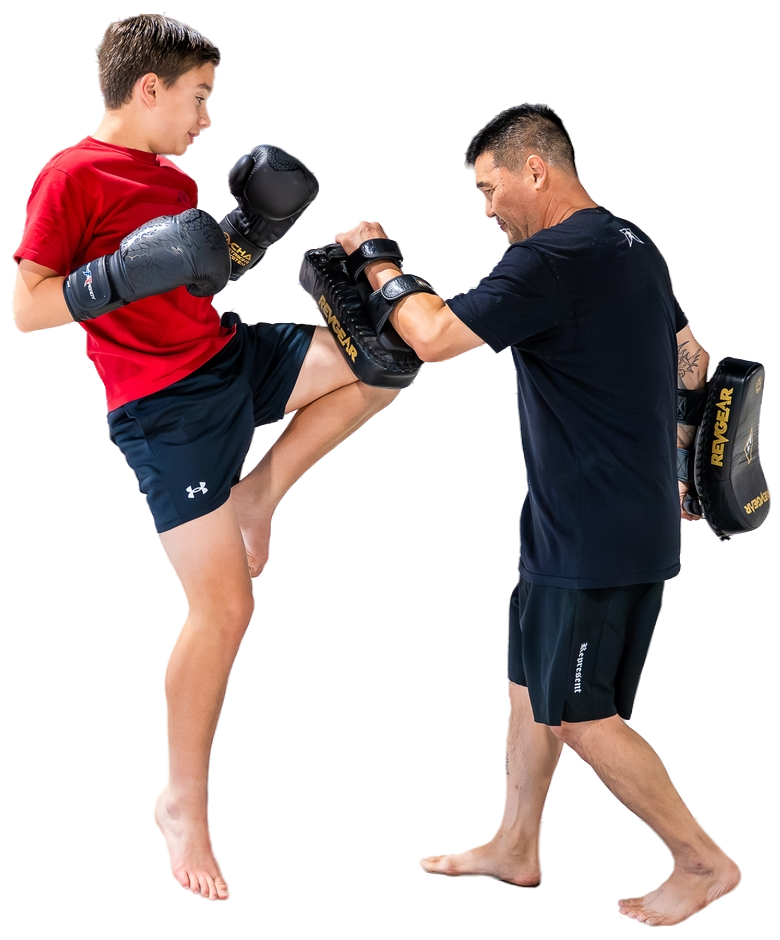
Effective self defense operates on three layers. Awareness. De-escalation. Physical skills. Each layer prevents the need for the next.
Layer 1: Awareness and Avoidance
The best fight is the one you never have. Awareness lets you notice problems before they become emergencies. This is the cheapest, easiest, and most effective layer of self defense. Almost every incident has warning signs that an aware person can spot.
Layer 2: De-escalation
When you cannot avoid a situation, the next layer is calming it down. Most confrontations start verbally. Skilled de-escalation can end most situations without physical contact. This is a learnable skill that quality self defense programs teach explicitly.
Layer 3: Physical Skills
When awareness and de-escalation fail, you need physical skills as a backup. These skills should be drilled enough that they work under stress. The physical layer is the last resort, not the first option.
Awareness And Avoidance
Awareness is a skill, not a personality trait. It can be trained like any other ability.
Color Code Awareness
Many self defense programs teach a color code system originally developed by Jeff Cooper. White is unaware and oblivious. Yellow is generally alert but relaxed. Orange is alert to a specific potential threat. Red is committed to action. The goal is to live in yellow most of the time. Most people live in white and are caught completely unaware when problems arise.
Environment Reading
Notice exits when you enter a space. Notice who is around you. Notice what people are doing. None of this requires paranoia. It just means your eyes are open. After a few months of practice, this becomes automatic.
Body Language Reading
Most predatory behavior has consistent signs. Excessive interest in you. Approach without clear purpose. Body language that does not match words. Aggressive posture. Trained observers can spot these signs early enough to leave the area before any escalation.
Trust Your Gut
If something feels wrong, leave. Your subconscious processes information faster than your conscious mind. The feeling that something is off is often correct even when you cannot identify why. Trained responses honor this signal.
Avoid Predictable Patterns
If you do the same things at the same times every day, you become predictable. This matters most in larger cities and in specific risk professions. Vary your routes when possible. Be unpredictable in small ways.
Phone Discipline
The single biggest awareness drain in modern life is the phone. Walking through a parking lot looking at your phone makes you a target. Save the screen time for when you are seated in a safe environment.
De-escalation Skills
De-escalation is the highest skill in self defense. Anyone can throw a punch. Very few can defuse a charged situation before it becomes physical. Quality self defense programs spend significant time on this layer.
Calm Voice
Your voice is your first weapon. A calm, low, steady voice can change the emotional temperature of a confrontation faster than anything else. Practice talking slowly and clearly. Avoid raising your pitch.
Open Body Language
Threatening body language invites more aggression. Open hands at chest level, slight angled stance, and a non-confrontational posture signal that you are not the threat. This works on attackers more often than people realize.
Give the Other Person an Out
Cornered animals fight. Cornered humans do too. Whenever possible, give the other person a way to back down without losing face. Acknowledge their feelings even when their behavior is wrong. Use language that lets them save face.
Avoid Insults and Threats
Insults and threats lock both people into commitment. Once someone has issued a threat, backing down becomes harder. Even if you are right, even if they started it, do not escalate verbally. Win the long game.
Create Distance
If words are not working, increase distance. Step back. Move toward people. Move toward a door. Distance buys time, and time often ends confrontations before they become physical.
When to Stop Talking
There is a moment when de-escalation has failed and the person is committed to violence. At that moment, your voice stops mattering. Your skills must take over. Recognizing this moment quickly is critical. People who keep talking when the conversation is over often get hit before they can react.
Physical Self Defense Skills
When awareness and de-escalation have failed, physical skills matter. Real self defense skills are simple, repeatable under stress, and based on what actually works in real altercations.
Basic Striking
Hand strikes are the most common tool in real altercations. A trained defender with even basic boxing skills can deliver effective strikes that surprise an untrained attacker. The jab, the cross, the elbow, and the palm strike are the highest-value strikes for self defense.
Defensive Skills
Blocking, slipping, and parrying are as important as striking. The ability to take a hit and keep functioning often matters more than the ability to throw a hit. Boxing builds this defensive ability better than almost any other training.
Clinch And Grappling
Most real fights end up in clinch or on the ground. BJJ and wrestling skills are critical for managing this range. The ability to control a larger attacker, escape a bad position, or take an attacker down can end an altercation faster than striking.
Ground Survival
If you end up on the ground, knowing what to do matters more than almost any other skill. BJJ teaches positional escapes, submission defenses, and how to stand back up safely. Without this training, the ground is dangerous. With it, the ground becomes another tool.
Targets And Tools
Effective targets include the throat, the chin, the temple, the solar plexus, the knee, and the groin. Effective tools include the fist, the elbow, the knee, the head, and the heel. Quality training programs cover both targets and tools without making the techniques overly complex.
Disengagement
Knowing when to break contact and run is part of self defense. Many real altercations end with the defender creating an opportunity to escape rather than knocking the attacker out. The goal is to get home, not to win the fight.
The Best Martial Arts For Self Defense
Not all martial arts prepare you equally for real self defense. Here is an honest assessment.
Brazilian Jiu Jitsu
BJJ is one of the most proven self defense systems. It teaches control of a larger opponent, escapes from bad positions, and submissions that end altercations quickly. The downside is that BJJ does not address striking. Pair it with a striking art.
Boxing
Boxing teaches hand technique that translates directly to real altercations. Most fights happen at hand range. A trained boxer has significant advantages. The downside is that boxing does not address the grappling range that often follows initial exchanges.
Muay Thai
Muay Thai covers the most striking range with elbows for close quarters and clinch work for the transition to grappling. It is one of the most complete striking arts for self defense. Combine with BJJ for a complete system.
Wrestling
Wrestling builds incredible body control and takedown skills. It is highly applicable to real altercations because most fights involve some clinch. Wrestling pairs well with striking and BJJ.
MMA
MMA training blends striking, grappling, and wrestling into one system. This is the most realistic preparation for unstructured real-world altercations because it covers every range. MMA is widely considered the most complete self defense training available.
Traditional Martial Arts
Karate, taekwondo, and kung fu vary enormously in their applicability to real self defense. Some traditional schools focus on forms and patterns that have limited self defense value. Others train with hard contact and produce capable defenders. Visit any school before committing.
Krav Maga and Reality-Based Systems
Reality-based self defense systems claim to focus specifically on real altercations. Quality varies widely. The best are excellent. The worst teach techniques that fall apart under pressure. Look for schools that include live training and sparring, not just demo techniques.
Self Defense For Women
Women face self defense considerations that men do not. Most attackers are male and typically larger. The dynamics of harassment, assault, and predatory behavior involve specific patterns. Effective self defense for women addresses these realities directly.
Awareness in Public Spaces
Women are statistically more likely to be targeted in parking lots, public transit areas, and isolated spaces. Awareness in these specific environments matters more than awareness everywhere else.
Verbal Skills
Women often face escalating verbal harassment before any physical contact. Strong verbal skills can stop these situations before they progress. The ability to firmly say no, to attract attention from others, and to refuse to be drawn into prolonged conversation with strangers all matter.
Physical Skills That Work
Size differences matter less than people assume when proper technique is involved. A 130-pound woman with BJJ training can control a 200-pound man with no training. The leverage of grappling does not care about weight. Striking skills like elbows and knees from the clinch are similarly effective for smaller defenders.
Specific Risk Scenarios
Women should think specifically about risks like being grabbed from behind, being attacked in a confined space (car, elevator, doorway), and dealing with someone who refuses to leave. Quality programs cover these specific scenarios with realistic training.
Resources and Reporting
Knowing local resources matters. The National Domestic Violence Hotline. Local women's shelters. Police non-emergency lines. Trusted friends and family. Building a support network is part of self defense.
Self Defense For Kids
Confidence as Prevention
Kids who carry themselves with confidence are rarely bullied. Martial arts training builds this confidence through real skill development. Bullies pick targets they expect to dominate. A kid with quiet confidence is not that target.
De-escalation for Kids
Kids should learn to use their voice, find an adult, and walk away. These skills work in most school situations and prevent most fights. Quality kids martial arts programs teach these skills explicitly.
Physical Skills for Kids
BJJ is the highest-value physical self defense skill for kids because most school fights end up on the ground. A BJJ-trained kid can control a bullying kid without throwing a punch, often preventing real injury.
Communication With Parents
Kids should know they can talk to their parents about altercations without judgment. Open communication helps prevent ongoing situations and lets parents intervene when necessary.
Working With Schools
Schools have varying responses to bullying. Knowing your school's policies and being willing to involve administrators matters. Parents should not assume kids can handle every situation alone.
Self Defense For Older Adults
Older adults face self defense challenges related to physical changes, balance, and recovery. Training looks different than for younger adults but still produces real benefits.
Adapt Training to Age
Older adults should focus on skills that do not require explosive athletic ability. Awareness, de-escalation, and basic clinch and grappling skills work at any age. Hard sparring becomes less appropriate after a certain age.
Balance and Mobility
Self defense for older adults benefits from general balance and mobility training. Falling, whether in an altercation or in daily life, is a major risk after age 60. Training that builds proprioception and core strength reduces fall risk and builds the body control needed for self defense.
Targeted Skills
Older defenders should focus on disabling skills that end altercations fast. The throat strike. The eye attack. The knee disabler. These are not skills for sport but for emergency use. Quality programs teach these honestly.
Avoiding Confrontation
More than any other group, older adults should prioritize avoidance. Crossing the street to avoid a sketchy situation is not weakness, it is wisdom. Confidence in physical skills should make older defenders less, not more, likely to engage.
Kids face different self defense challenges than adults. Most kid violence happens at school in the form of bullying or fights. Stranger danger, while real, is statistically rare compared to peer aggression.
Arizona Self Defense Laws
Arizona has some of the most defender-friendly self defense laws in the country. Understanding them helps you act legally when self defense becomes necessary.
Stand Your Ground
Arizona is a stand your ground state. You are not required to retreat before using reasonable force to defend yourself in any place you are legally allowed to be. This includes public spaces, your workplace, and your home.
Castle Doctrine
Arizona has strong castle doctrine protections. You have broader rights to defend yourself in your home, your vehicle, and your business than in public spaces.
Reasonable Force
The force used in self defense must be reasonable and proportionate to the threat. Deadly force is only justified when facing deadly threat. Using more force than necessary can turn a legal self defense into a criminal charge.
Disclaimer
Self defense law is complex and case-specific. This section provides general education only. For specific legal advice, consult an Arizona attorney. Laws can change. Always verify current statutes if you carry weapons or are in a high-risk profession.
After An Incident
If you ever have to use self defense, the legal aftermath matters as much as the incident itself. Call 911. Be the first to report. Cooperate with police but consider speaking with an attorney before giving detailed statements. Document everything you can remember as soon as possible.
Common Self Defense Myths
Myth: One Technique Will Save You
No single technique works in every situation. Real self defense requires a toolkit of options that adapt to circumstances. Beware of any program that promises a magic move.
Myth: Pressure Points Solve Everything
Pressure point techniques look impressive in demonstrations but fail in real altercations because they require fine motor control that disappears under stress. Quality programs teach techniques that work even when adrenaline takes over.
Myth: You Need to Be Tough
Toughness is overrated. Skill and decision-making matter more. The toughest person in the room is often the one who avoids the fight entirely.
Myth: A Weapon Means You Are Safe
Weapons add tools but require even more training to use safely and legally. A weapon you cannot deploy under stress is a weapon that can be taken and used against you. Empty-hand skills must come first.
Myth: Self Defense Is About Winning
Real self defense is about going home safely. Winning the fight is irrelevant if you end up injured, in jail, or dead. The goal is always survival and escape.
Kids Martial Arts Costs In Arizona
Monthly Memberships
Kids martial arts programs in Arizona typically run $100 to $200 per month for unlimited training. Some gyms offer family discounts when multiple kids enroll, or when a parent also trains.
Gear
Initial gear costs $100 to $250 depending on the style. BJJ requires a gi. Kickboxing requires gloves, hand wraps, and shin guards. Most gyms in Arizona will help you source quality gear at fair prices.
Belt Promotions
Some gyms charge belt testing fees, typically $50 to $150 per promotion. Other gyms include promotions in the membership.
Tournaments
Local tournaments cost $50 to $100 to enter. National tournaments cost more once you factor in travel and lodging.
Total Annual Cost
Expect to spend $1,500 to $3,000 per year for a kid in a quality martial arts program.
Training As A Family
One of the underrated benefits of martial arts is that the whole family can train together. Many Arizona gyms have parents who train alongside their kids, and the results are powerful.
Shared Experience
When parents train, kids see the activity differently. It is not something parents force them to do while sitting in the lobby on their phones. It is something the family does together. Kids whose parents train are far more likely to stick with martial arts long term.
Real Modeling
Kids learn what they see, not what they are told. A parent who shows up consistently, works through frustration, and respects coaches and training partners teaches their kid more than any lecture could. Watching mom or dad fail at a technique and try again is one of the most valuable lessons a kid can receive.
Family Schedules at the Same Gym
Most quality gyms in Arizona stack their kids and adult classes so families can train back to back. A parent can do a 6 PM class while their kid is in the 6 PM kids class, or vice versa. This saves driving time and turns the gym into a regular part of family life.
Family Memberships
Many gyms offer family pricing for multiple members. Two kids and a parent on the same membership often costs less than three separate memberships.
Common Conversations
Families that train together end up talking about training. What techniques are working. What frustrations they faced in class. What they want to work on next. This shared vocabulary builds connection in a way that few other activities can match.
Building Lifetime Habits
Kids who grow up watching their parents train are kids who become adults that train. The habit transfers. Many of the most successful adult competitors in Arizona BJJ started training because their parents trained first.
How Long Until You See Results
Parents often ask how long until they see changes in their kid. The honest answer is that different changes happen on different timelines.
First Two Weeks
In the first two weeks, expect physical adjustment. Your kid will be tired after classes. They will probably feel sore the day after their first or second class. They will be learning gym etiquette, names of techniques, and the rhythm of class.
First Month
By the end of the first month, your kid should be able to execute basic techniques and demonstrate proper class behavior. Look for signs that they recognize their coaches and training partners by name. Notice if they start using martial arts vocabulary at home.
Three Months
Around the three-month mark, parents start to see behavior changes outside the gym. Better focus on homework. Easier mornings. Less arguing about chores. These changes are usually subtle and incremental, but they add up.
Six Months
By six months, your kid will have real martial arts skill. They will have started earning belt stripes or rank promotions. Their physical fitness will have improved noticeably. Their confidence will be visible.
One Year
After a year of consistent training, your kid will have undergone significant development in skill, fitness, character, and confidence. This is the point where most parents look back and realize their kid is fundamentally a different person than the kid who walked in for the first class.
Long Term
Kids who continue training martial arts through their teenage years often become exceptional adults. The discipline, work ethic, and resilience built through years of training transfer directly to college, careers, and relationships.
Summer Camps And Special Programs
Many Arizona martial arts gyms run summer camps that combine martial arts training with games, field trips, and other activities. These camps are popular because Arizona summers make outdoor camps impractical.
What Camps Include
Daily martial arts instruction at the kid's level. Other physical activities like obstacle courses or pool time. Educational components like character lessons or homework time. Lunch and snacks. Field trips to museums, parks, or movies.
Pricing
Summer camps in Arizona run $200 to $400 per week. Many gyms offer multi-week discounts.
Choosing a Camp
Look for ratios of one coach to eight kids or better. Look for clear daily schedules. Ask about food, breaks, and downtime structure. Visit before committing.
Kids Programs At Fight Ready
Fight Ready MMA & Fitness has been a home for kids martial arts in Scottsdale since 2014. Our kids program is built around real martial arts skill paired with character development.
Our Coaches
Hunter Azure leads the youth kickboxing program and coaches the amateur fight team. He is also an active professional MMA fighter. Bobby Moffett heads our no-gi BJJ program and coaches kids alongside adult classes. Our entire coaching staff has experience working with kids of all ages and skill levels.
Age Groups
Ages 5 to 7. Introduction to martial arts through games, drills, and basic technique. Ages 8 to 12. Full martial arts training with structured technique and controlled drilling. Teens 13 and up. Train alongside young athletes building real skill, fitness, and competition options.
What Kids Learn
Brazilian jiu jitsu, kickboxing, wrestling fundamentals, and life skills. Confidence, focus, discipline, and respect built into every class.
Class Schedule
Kids classes run multiple times per week, Monday through Saturday. Most kids attend two to three classes per week.
Free Intro Class
Every new family at Fight Ready gets a free intro class for their kid. No card required. Bring your kid, meet the coaches, see the gym, and decide on your own time.
Visit the Gym
Fight Ready is at 8666 E Shea Blvd Ste 147 in Scottsdale, two minutes from the 101 with free parking.
Frequently Asked Questions
What is the best age to start kids martial arts?
Most kids can start around age 5.
Will martial arts help my kid with focus and behavior?
Yes. Regular martial arts training consistently improves focus, discipline, and behavior.
Is martial arts safe for kids?
Yes when done at a quality gym with proper supervision and protective gear.
What is the best martial art for kids?
It depends on your goal. BJJ is excellent for real skill. Kickboxing builds athleticism. Most quality programs blend several arts.
How much does kids martial arts cost?
$100 to $200 per month for unlimited training in Arizona.
How often should my kid train?
Two to three classes per week.
Try A Free Kids Class
Your kid's first class is free. Bring them in, meet our coaches, see if Fight Ready is the right fit.
