
Brazilian Jiu Jitsu In Scottsdale: The Complete Guide
Table Of Contents
- What is Brazilian Jiu Jitsu
- Why BJJ is the Fastest Growing Martial Art in Scottsdale
- How BJJ Works
- Gi vs No Gi BJJ
- The BJJ Belt System Explained
- What to Expect on Your First BJJ Class
- BJJ Gear Guide
- How to Choose a BJJ Gym in Scottsdale
- BJJ Training Schedule and Time Commitment
- BJJ for Different People (Beginners, Women, Kids, Older Adults, Athletes)
- Common BJJ Mistakes and How to Avoid Them
- BJJ Competition in Arizona
- BJJ Health Benefits
- How Much Does BJJ Cost in Scottsdale
- BJJ at Fight Ready
- Frequently Asked Questions
What Is Brazilian Jiu Jitsu
Brazilian jiu jitsu is a grappling martial art that focuses on ground fighting, submissions, and positional control. It teaches a smaller, weaker person how to defeat a larger, stronger opponent using leverage, timing, and technique rather than strength.
The art was refined in Brazil in the early 20th century by the Gracie family, who adapted traditional Japanese jiu jitsu and judo into a system that emphasized ground fighting. Royce Gracie famously demonstrated the effectiveness of BJJ at the first UFC events in the 1990s, defeating much larger opponents from striking-based martial arts. Since then, BJJ has become a foundational skill for any serious mixed martial artist and a popular standalone sport worldwide.
At its core, BJJ teaches three things. First, how to control another person on the ground. Second, how to apply submissions like joint locks and chokes to force an opponent to give up. Third, how to escape and defend when you are the one in trouble. These skills make BJJ one of the most practical and proven martial arts on the planet.
In Scottsdale, BJJ has exploded in popularity over the last decade. Adults of every age, kids as young as five, and serious competitors all train side by side at the same gyms. What started as a niche grappling art has become a mainstream fitness and lifestyle activity in the Phoenix metro.
Why BJJ Is The Fastest Growing Martial Art In Scottsdale
Drive around north Scottsdale and you will see BJJ gyms in nearly every shopping center. Ten years ago, you could count them on one hand. Today, dozens of academies serve the Scottsdale, Phoenix, Paradise Valley, and Tempe markets. There are real reasons for that growth.
It Works
BJJ has been tested in real fights, real competition, and real self-defense situations for decades. It is not a theoretical martial art. The same techniques drilled in a Scottsdale academy on a Monday night have been used to win UFC championships, ADCC titles, and IBJJF world championships. When something works, people share it. Scottsdale has become a hub for BJJ partly because there is no shortage of proof that the art delivers.
It is Beginner Friendly
BJJ has a much lower injury rate than striking arts because there is no punching or kicking and you can tap out of any bad position. Beginners can drill technique from day one without taking damage. The learning curve is steep but accessible. Most adults can be functional on the mat within a few months of regular training.
It Builds Real Fitness
Rolling, the BJJ term for live sparring, is some of the hardest cardio you will ever do. A single five-minute round will leave you winded in a way no treadmill can. BJJ builds grip strength, core stability, hip flexibility, and full-body conditioning in ways traditional gym workouts cannot match. Many Scottsdale members train BJJ as their primary form of fitness.
The Community is Real
BJJ is one of the only martial arts where you spend most of your training time in close physical contact with other people. That builds a unique kind of community. Members who train together for years become close friends. Many Scottsdale gyms have hosted weddings, baby showers, and graduations among their BJJ families.
It Scales for Life
BJJ is one of the few martial arts where practitioners often train into their 60s and 70s. The emphasis on technique over strength means you can keep improving as your body changes. Many of the highest-level BJJ practitioners in the world are over 50.
How BJJ Works
BJJ training revolves around a few core concepts that build on each other class by class.
Positional Hierarchy
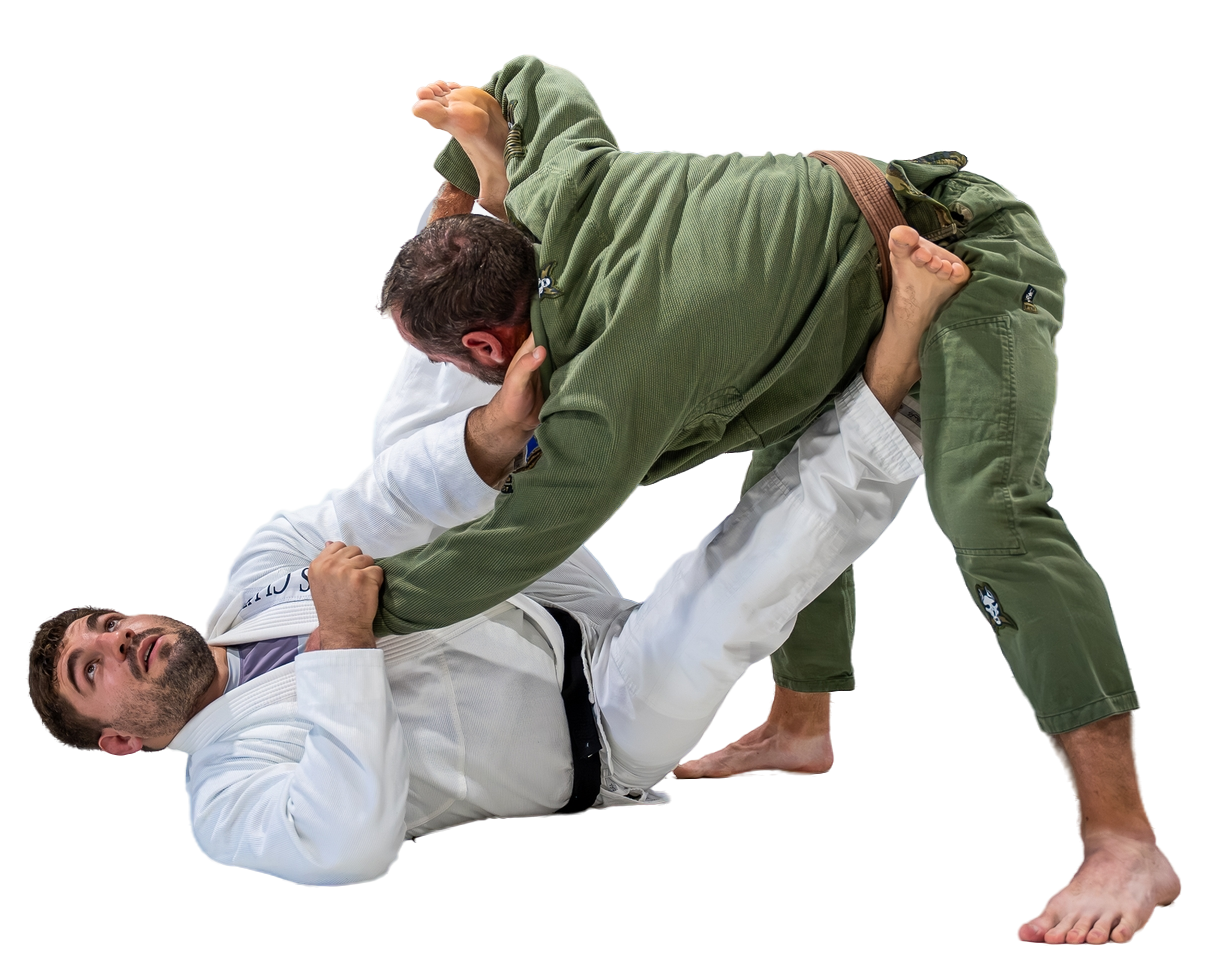
BJJ assumes that some positions are better than others. From the worst to the best, the general positional ladder goes: under mount, in someone's guard while they are on bottom, in side control on top, in mount, and finally with back control. The entire art is about climbing this ladder against your opponent while preventing them from climbing it against you.
Submissions
Once you have established a dominant position, you can attempt a submission. Submissions fall into three main categories. Joint locks attack the elbow, shoulder, knee, or ankle. Chokes attack the airway or blood flow to the brain. Cranks attack the neck or spine through pressure. When done correctly, submissions force the opponent to tap out before any real damage occurs.
Escapes
Escaping bad positions is half of BJJ. A skilled practitioner can be on bottom in mount and still feel calm because they have practiced thousands of repetitions of getting out. Escapes are usually the first technique a beginner should master.
Sweeps
Sweeps are techniques used from bottom to reverse the position and end up on top. A successful sweep takes you from one of the worst positions to one of the best in a single motion.
Drilling and Rolling
A typical BJJ class includes a warm-up, technique instruction, drilling those techniques on a partner, and then live rolling at the end of class. Drilling builds muscle memory. Rolling is where you test what you have learned against a resisting opponent. Both are essential.
Gi VS No Gi BJJ
BJJ is trained two ways. With a gi, the traditional uniform that looks like a thick karate uniform. And without a gi, in shorts and a rashguard. Most serious practitioners train both. Each has its own style, pace, and strategy.
Gi BJJ
The gi is made of heavy cotton with a thick collar and reinforced cuffs. Practitioners grip the cloth to control their opponent. The pace is slower and more methodical because grips slow things down. Submissions like lapel chokes only exist in the gi. Major gi competitions include the IBJJF World Championship, the Pans, and the Europeans. Gi training tends to emphasize position over speed.
No Gi BJJ
No gi practitioners wear shorts and a rashguard. With no cloth to grip, the action speeds up and scrambles become more frequent. Wrestling and leg lock techniques play a bigger role. No gi is closer to what you would see in MMA. Major no gi competitions include the ADCC World Championship, EBI, and Quintet. No gi training tends to emphasize speed, athleticism, and scrambles.
Which One Should You Start With
Most gyms in Scottsdale offer both. If you are deciding which to focus on, consider your goals. If you want to compete in IBJJF or train traditional BJJ, focus on gi. If you want to cross-train for MMA or like the faster pace, focus on no gi. The best approach for most beginners is to train both for the first year to find what you enjoy most.
The BJJ Belt System Explained
BJJ has one of the most respected belt systems in martial arts. Unlike many traditional arts where belt promotions happen on a schedule, BJJ belts are earned through years of training and demonstrated skill.
White Belt
Every BJJ practitioner starts at white belt. This is the longest belt rank for most people and typically lasts 18 to 30 months. At white belt you learn the fundamentals. Survival on bottom, basic escapes, basic submissions, basic positions. The goal is to build a foundation.
Blue Belt
Blue belt is where the techniques start to come together. You can defend yourself against most untrained opponents. You begin to develop a personal style. Blue belt typically lasts 24 to 48 months. Many casual practitioners stop at blue belt.
Purple Belt
Purple belt represents the transition from intermediate to advanced. Purple belts can teach lower belts and have developed real expertise in several positions. Purple belt typically lasts 18 to 36 months.
Brown Belt
Brown belt is the final rank before black belt. Brown belts have a deep, complete understanding of the art and are typically capable instructors and competitors. Brown belt typically lasts 12 to 24 months.
Black Belt
Black belt represents mastery of the fundamentals and the ability to teach others. Most BJJ practitioners earn black belt 10 to 15 years after starting. Above black belt are additional degrees and eventually red and black belt (coral belt) and red belt for those who have given decades to the art.
Stripes
Each belt rank has four stripes that mark progress within the belt. A white belt with three stripes is closer to blue than a white belt with zero stripes. Stripes are typically awarded for time on the mat, technical progress, and consistency.
Kids Belt System
The kids belt system is different and includes additional colors like gray, yellow, orange, and green that bridge the gap before they age into the adult ranks.
What To Expect On Your First BJJ Class
Walking into a BJJ gym for the first time is intimidating. Knowing what to expect makes the first class much easier.
Arrive Early
Show up 15 to 20 minutes before class. You will need to fill out a waiver, change into your gear, and meet the front desk or coach. If the gym offers loaner gis or rashguards, this is when to grab one.
Class Structure
Most BJJ classes follow a similar structure. A warm-up of light movement and partner drills. A technique lesson where the coach demonstrates a move and breaks it down. Drilling where you practice the technique on a partner. Positional sparring or free rolling at the end. Most classes run 60 to 90 minutes.
After Class
Shake hands with everyone you trained with. Thank the instructor. Hydrate. Stretch a little. Expect to feel sore the next day. Most beginners experience their hardest soreness after their second or third class, not their first.
Etiquette
BJJ has a culture of respect. Take your shoes off before stepping on the mat. Greet your training partners. If you have a partner you are drilling with, take turns. After rolling, slap and bump hands as a sign of respect. Do not coach lower belts unless they ask. Listen when the instructor is teaching.
Tapping
The most important rule in BJJ is to tap when you are caught in a submission. Tap by hitting your partner with your hand two or three times, or tap on the mat if your hand is trapped. You can also tap verbally by saying 'tap' or 'tapping'. Never try to muscle out of a submission. Ego is the fastest way to get hurt.
BJJ Gear Guide
Your First Class
For your first class you need almost nothing. Athletic shorts, a t-shirt, and water. Most gyms in Scottsdale will provide a loaner gi or rashguard.
After You Sign Up
Within your first month you will want to invest in some basic gear. The cost adds up but you only buy most of it once.
Gi
A BJJ gi costs $80 to $200. Brands like Tatami, Hayabusa, Sanabul, and Origin are popular and durable. Choose a gi that fits IBJJF standards if you plan to compete. A white gi works for any gym; blue and black are also standard. Some gyms have color rules so check with your coach.
Rashguard
For no gi, you need a rashguard. A rashguard is a tight-fitting athletic top that protects your skin from mat burn and prevents your sweat from getting all over training partners. Quality rashguards cost $30 to $60.
Shorts
No gi BJJ shorts are designed with no pockets and a flat waistband. Fight shorts or MMA shorts work. Avoid shorts with zippers, buttons, or hard waistbands.
Mouthguard
Optional but recommended, especially for no gi where accidental head clashes happen. A basic boil-and-bite mouthguard works fine.
Ear Guards
Long-term BJJ training can cause cauliflower ear. Ear guards prevent this. Most beginners do not need them, but if you are training daily or rolling hard, look into them.
Athletic Tape
Finger and toe tape protects against the wear and tear of gi grip fighting. Many advanced BJJ athletes tape their fingers before every class.
How To Choose A BJJ Gym In Scottsdale
Scottsdale has dozens of BJJ gyms. Choosing the right one matters more than most people realize. The gym shapes your training, your community, and how long you stick with the art.
Coach Credentials
The most important factor is the head coach. What rank is the head coach? Where did they earn their black belt? Who are their lineage and instructors? A legitimate BJJ black belt has a verifiable history. If a gym is run by someone with no clear lineage, ask questions.
Class Schedule
Look at the class schedule before joining. Does the gym run multiple classes per day? Are there beginner-friendly fundamentals classes? Are there classes that fit your work schedule? A gym with only two classes per week will not work for most adults.
Gi vs No Gi Mix
Some gyms are gi-heavy. Some are no gi-heavy. Some teach both equally. Match the gym to your goals.
Gym Culture
Visit during a free intro class. Watch how members interact. Is the vibe welcoming or cliquey? Is the coach approachable? Are upper belts kind to lower belts? Are kids and adults mixing well? A toxic gym culture will burn you out faster than anything.
Cleanliness
BJJ involves close skin contact. Mat hygiene matters. The mats should be cleaned daily. Members should be expected to wear clean gear. If the gym smells, walk out.
Competition Team
If you want to compete, look for a gym with an active competition team. Look at recent tournament results on Instagram or competition platforms.
Beginner Programs
Strong gyms have a dedicated beginner curriculum. This often means a separate fundamentals class where beginners can drill technique with other beginners. Avoid gyms where beginners are thrown into open mat with experienced grapplers from day one.
BJJ Training Schedule And Time Commitment
How often you train BJJ determines how quickly you progress. There is no magic schedule but some guidelines help.
Once a Week
Training once a week is the bare minimum and produces slow progress. You will retain enough to feel like you are still doing BJJ but new techniques will not stick. Best suited for casual practitioners who want some exposure to grappling.
Twice a Week
Twice a week is the most common schedule for working adults. It produces steady progress and is sustainable long term. Most adults who train twice a week earn their blue belt within three years.
Three to Four Times a Week
Three to four classes per week is where progress accelerates significantly. New techniques stick. You start to see real patterns in your game. Competition becomes a realistic option. This is the sweet spot for serious recreational practitioners.
Five or More Times a Week
Five plus classes per week is competition-level training. At this volume, recovery, nutrition, and sleep become as important as the training itself. Expect to develop quickly but also expect to deal with minor injuries and fatigue.
BJJ For Different People
BJJ for Beginners
If you have never trained any martial art, BJJ is one of the most beginner-friendly options. The combination of low injury risk, clear progression, and friendly culture makes it easy to start. Stick with the fundamentals class for the first three months and ignore the urge to skip ahead to advanced material.
BJJ for Women
BJJ is one of the most empowering martial arts for women. The leverage-based system means a smaller woman can submit a larger man with proper technique. Most gyms in Scottsdale have women's-only classes or women's open mats. Look for a gym with multiple women training as regulars.
BJJ for Kids
Kids BJJ programs typically start at age five. Kids BJJ teaches discipline, focus, real self defense, and physical confidence. Unlike most kids martial arts programs, BJJ does not rely on flashy belt promotions, but builds genuine skill that translates outside the gym.
BJJ for Older Adults
Adults over 50 can absolutely start BJJ. Focus on technique over strength. Avoid rolling with the youngest, fittest members until you have built a base. Communicate clearly with your training partners about pace and intensity. Many BJJ practitioners earn their black belt in their 50s and 60s.
BJJ for Athletes
If you come from another sport, BJJ will challenge everything you think you know about athleticism. Wrestlers have a head start with body control. Football players have explosive power but need to learn finesse. Runners and cyclists adapt quickly to cardio demands but need to build upper body strength.
Common BJJ Mistakes And How To Avoid Them
Going Too Hard Too Soon
New BJJ practitioners often roll like every match is the world championship. This leads to injuries and burnout. Roll at 50 to 70 percent intensity for your first six months. You will learn more by drilling slow and clean than by spazzing through every roll.
Skipping The Fundamentals
Many beginners get bored of basics and want to learn flashy techniques. Resist this. Black belts can hit the same five techniques you learned in your first month with devastating effectiveness because they have done them thousands of times.
Not Tapping
Ego is the biggest enemy in BJJ. If you are caught, tap. There is no shame. The mat is for learning, not for proving anything. Tapping early prevents injuries that can keep you out of training for months.
Comparing Yourself To Others
Every BJJ journey is different. Some students progress fast for a year then plateau. Some struggle for six months then suddenly click. Some quietly become technical monsters while everyone else focuses on flashy moves. Compare yourself only to where you were three months ago.
Inconsistent Training
Skipping weeks of training and then trying to make up for it with binge sessions is the worst pattern in BJJ. Consistent two-times-per-week training will beat occasional four-times-per-week training every time.
BJJ Competition In Arizona
Arizona has a thriving BJJ competition scene. Most Scottsdale BJJ gyms have members who regularly compete.
Local Tournaments
Arizona hosts multiple grappling tournaments each year. Organizations like Jiu Jitsu World League, NAGA, Fight to Win, and AGF run events in the Phoenix metro. Local tournaments are the best starting point for new competitors.
National Tournaments
The IBJJF Pans (held in Florida) and the IBJJF World Championship (California) are the biggest gi tournaments in the world. The ADCC trials and ADCC World Championship are the most prestigious no gi events.
Preparing for Competition
Competing in BJJ requires three to six months of dedicated training. Most competitors increase their training volume in the eight weeks leading up to a tournament, work on a specific game plan with their coach, and cut weight if competing in a specific division.
Should You Compete
Competition is optional in BJJ. Many high-level practitioners never compete. That said, competition forces growth that is hard to replicate in training. Even one tournament will teach you more about your game than six months of regular classes.
BJJ Health Benefits
Fat Loss and Cardio
A typical BJJ class burns 500 to 1,000 calories. Rolling builds cardio in ways traditional cardio training cannot match because it forces you to manage breath under stress.
Strength and Conditioning
BJJ builds grip strength, core stability, and full-body functional strength.
Flexibility
Regular BJJ training opens up the hips, shoulders, and spine over time.
Mental Health
BJJ is one of the most effective stress relievers available. The combination of physical exertion, mental focus, and community produces measurable benefits for anxiety and depression.
Discipline and Confidence
BJJ requires showing up consistently and pushing through frustration. This builds discipline that transfers to work, relationships, and personal goals. The confidence of knowing you can defend yourself changes how you carry yourself.
How Much Does BJJ Cost In Scottsdale
Monthly Memberships
BJJ memberships in Scottsdale range from $150 to $250 per month for unlimited training. Family memberships and longer-term contracts often reduce the per-month cost.
Drop-In Fees
Most gyms charge $25 to $40 for a single drop-in class if you are visiting from out of town.
Private Lessons
Private one-on-one BJJ lessons typically cost $80 to $150 per hour depending on the coach's rank and experience.
Gear
Plan to spend $200 to $400 on your initial gear setup including a gi, rashguard, shorts, and basic accessories.
Total First Year Cost
A typical first year of BJJ in Scottsdale costs $2,500 to $3,500 between membership, gear, and the occasional tournament.
BJJ At Fight Ready
Fight Ready MMA & Fitness has been the home for serious BJJ in Scottsdale since 2014. Our BJJ program is built around three principles. Real fundamentals. Real coaching. Real community.
Our Coaches
Santino DeFranco leads our professional MMA team and brings high-level grappling to every class. Bobby Moffett heads our no-gi BJJ program and is an active professional MMA fighter. Dan Moret offers private BJJ instruction and self-defense programming. Each coach has spent years at the highest levels of grappling and combat sports.
Our Program
We run gi and no gi classes daily Monday through Saturday. Beginners join the fundamentals class to learn the basics in a structured environment. Advanced students train in mixed-level classes with the entire gym. Kids ages five and up have their own age-appropriate program.
Our Community
Members at Fight Ready include doctors, business owners, stay-at-home parents, college students, and professional fighters. Everyone trains together. The culture is welcoming, hard-working, and free of ego.
Our Facility
Our Scottsdale gym sits at 8666 E Shea Blvd Ste 147, two minutes from the 101 with free parking. Wall-to-wall mats, a full-size cage, dedicated striking area, and a real weight room.
Try a Free Class
Every new member at Fight Ready gets a free intro class. No card required. No pressure. Show up, train with the team, and decide on your own time.
Frequently Asked Questions
What is Brazilian jiu jitsu?
Brazilian jiu jitsu is a grappling martial art focused on ground fighting, submissions, and positional control. It teaches a smaller person to defeat a larger opponent through leverage and technique.
How long does it take to get a black belt in BJJ?
Most BJJ practitioners earn their black belt in 10 to 15 years of consistent training.
Is BJJ good for self defense?
Yes. BJJ is one of the most effective martial arts for real-world self defense.
How much does BJJ cost in Scottsdale?
BJJ memberships in Scottsdale typically range from $150 to $250 per month.
Can I start BJJ with no experience?
Yes. Most BJJ students start with zero experience.
What is the difference between gi and no gi?
Gi uses a traditional uniform with grips on cloth. No gi uses shorts and a rashguard with no grips on clothing.
What gear do I need to start BJJ?
For your first class, athletic clothes only. After that, a gi for gi classes and shorts plus rashguard for no gi.
How often should I train BJJ?
Two to three classes per week is enough to make consistent progress as a beginner.
Start Your BJJ Journey
Your first class is free. Show up, train with our team, and see why Fight Ready has been the home for BJJ in Scottsdale since 2014.
